
Why a Licensed Electrician Is Essential for Tesla Charger Installation
As electric vehicles become more common, more homeowners are choosing to install Tesla Wall Connectors or Level 2 EV chargers at home for faster, more convenient charging.
Installing an EV charger is a smart investment – but only when it’s done correctly. Because this equipment draws significant power and connects directly to your home’s electrical system, installation isn’t a general maintenance task. It’s specialized electrical work that requires professional training, licensing, and permitting.
That’s where a licensed master electrician comes in.
Understanding the Difference: Handyman vs. Licensed Electrician
Before hiring anyone to work on your electrical system, it’s important to understand the difference between a handyman and a licensed electrician.
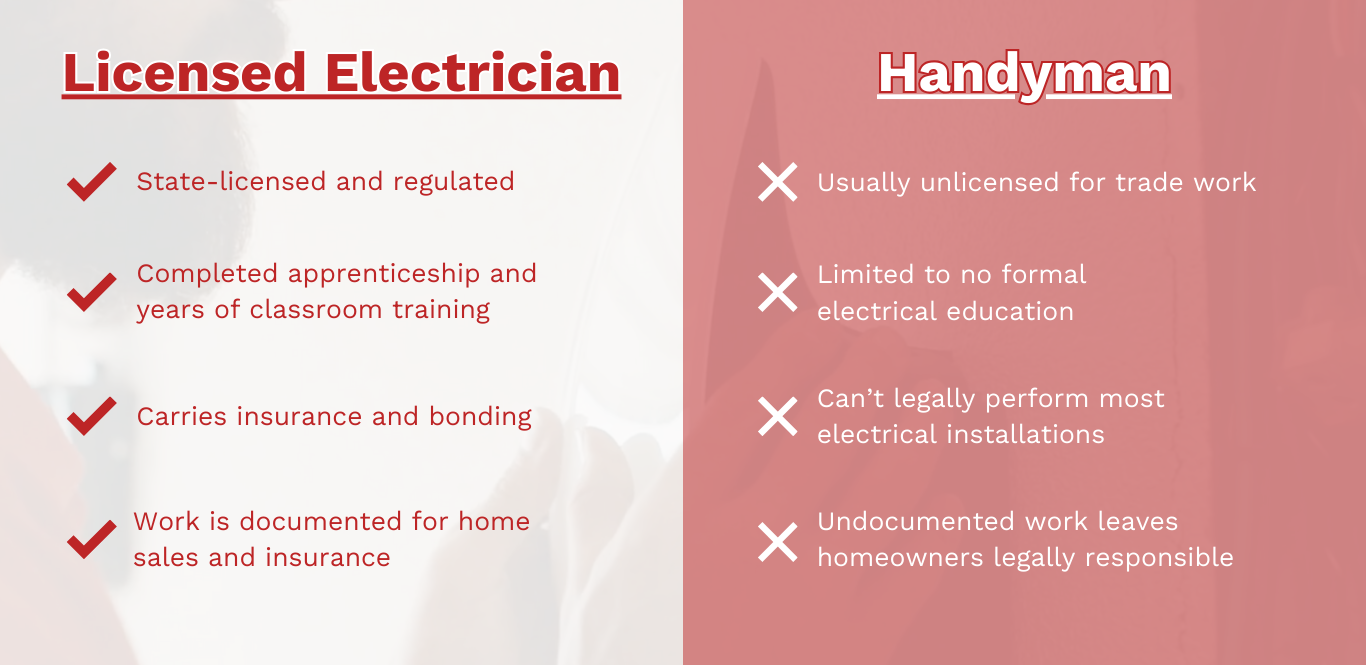
An EV charger installation isn’t a “small job.” It’s a permanent electrical upgrade that affects your panel, wiring, and overall electrical load. That places it firmly in electrician territory.
What Is a Handyman?
A handyman is a general maintenance professional who helps homeowners with routine, non-specialized tasks. Handymen provide real value for everyday repairs and cosmetic improvements, but they are not trade professionals.
What Can a Handyman Do Legally in Texas
Laws vary by location, but in Texas, handymen are limited to small, non-specialty projects that do not require a license or permit, such as:
Minor repairs
Painting
Installing appliances like washing machines
Basic plumbing maintenance (e.g., unclogging a drain)
Specialized trades, such as electrical, plumbing, and HVAC, require state licensure.
When to Call a Handyman vs. a Licensed Electrician
Knowing who to call protects your home, your investment, and your safety.
Call a handyman when:
The work is cosmetic or surface-level
Electrical, plumbing, or gas systems are not altered
Call a licensed electrician when:
Installing an EV charger
Adding or upgrading circuits
Modifying a breaker panel
Increasing your home’s electrical load
Installing outdoor electrical equipmen
A simple rule of thumb:
If it connects to your electrical panel or runs at high power for hours at a time, it’s electrician work.
Why EV Charger Installation requires a Licensed Master Electrician
Tesla Wall Connectors and Level 2 chargers operate at high amperage for extended periods. This demands expert design and installation.
A licensed master electrician will:
Evaluate your home’s electrical capacity
Install the correct breaker and wiring
Ensure grounding and bonding are correct
Protect your warranty and insurance coverage
With an electrician’s education and oversight, your home and vehicle can stay safer.
The Hidden Costs of Choosing the Cheapest Option
Homeowners who hire unlicensed installers often face unexpected issues later, including:
Failed inspections with the city
Equipment damage
Warranty cancellations
Insurance issues
Rewiring and reinstallations
Fire risk
Electrical mistakes aren’t cosmetic; they’re dangerous.
Frequently Asked Questions About Tesla and EV Chargers
-
An EV charger supplies electricity from your home to recharge your vehicle’s battery. Home chargers allow overnight charging and reduce reliance on public stations.
Proper installation ensures the charger can safely handle a continuous electrical load.
-
A Level 2 charger operates at 240 volts, similar to large appliances like ovens or dryers, and charges much faster than standard outlets.
Level 1 (120V): Very slow charging
Level 2 (240V): Adds 20–40 miles of range per hour
Tesla Wall Connectors are Level 2 chargers, which is why professional electrical installation is required.
-
Installation is a multi-step electrical process that includes:
Evaluating your electrical panel and available capacity
Installing a dedicated high-amperage circuit
Mounting and wiring the Wall Connector
Testing for safe and reliable operation
Because of the sustained power draw involved, this is never a DIY or handyman project.
-
Not every electrician has EV-specific experience. Tesla recommends using electricians familiar with EV charging systems to ensure proper installation and warranty protection.
All-In-One Electric is a Tesla-certified installer, which means:
Our electricians are trained specifically on Tesla equipment
Installations meet Tesla and NEC requirements
Work is performed to manufacturer's and safety standards
-
Only in very limited situations, such as replacing an existing light fixture or outlet—and even then, it depends on local regulations.
High-power projects like EV charger installation require in-depth knowledge and licensing, and should always be handled by a professional electrician.
Protecting Your Home and Investment
When installing a Tesla charger, cutting corners can put at risk:
Your home
Your vehicle
Your insurance coverage
Your family’s safety
For EV charger installation, the right choice is always a licensed master electrician.
All-In-One Electric brings deep professional expertise to every EV charger installation, with a focus on safety, code compliance, and long-term reliability. Our father-son team of dual master electricians specializes in installing Tesla Wall Connectors and universal Level 2 chargers for homes throughout Richardson, Plano, Garland, and North Dallas, offering detailed electrical assessments, precise wiring, and installations backed by workmanship warranties and manufacturer guarantees.
As Tesla-certified electricians, we meet rigorous manufacturer and safety standards so your home charging station is installed correctly and performs dependably over time, with ongoing support available for questions or maintenance.