Does Your Home Have Aluminum Wire? Make Sure You’re Safe with This Simple Fix
If your home was built between 1965 and 1973, there's a good chance it has aluminum wiring running through the walls. That's not a reason to panic, but it is a reason to pay attention.
Aluminum wiring isn't inherently defective. It was a widely accepted material during a period when copper prices spiked, and builders needed an alternative. The problem is what happens at the connections. Over decades of use, aluminum wiring behaves differently than copper at the points where wires meet outlets, switches, and fixtures, and that difference is where fire risk enters the picture.
The fix doesn't always mean tearing out every wire in your house. For most homes, a process called pigtailing offers a code-compliant, electrician-approved solution. Here's what you need to know.
Why Aluminum Wiring Became Common in the First Place
Copper is the preferred wiring material for homes, but when prices rose sharply in the mid 1960s during the residential construction boom, builders needed an alternative. Aluminum was cheaper, lighter, and readily available, so the electrical industry approved it for branch circuit wiring, and builders used it extensively from about 1965 through the early 1970s. By the time concerns emerged, aluminum wiring had been installed in an estimated two million homes across the United States.
The Consumer Product Safety Commission studied the issue and found that homes with aluminum wiring are significantly more likely to have one or more connections that reach fire-hazard conditions than homes wired with copper. The risk is concentrated at the connection points, not along the wire runs themselves.
What Makes Aluminum Wiring Risky at Connections
Aluminum has physical properties that create problems over time when it's connected to standard outlets, switches, and fixtures designed for copper:
Thermal expansion and contraction. Aluminum expands and contracts more than copper as it heats and cools during normal use. Over years of electrical cycling, this movement causes connections to loosen. Loose connections create resistance. Resistance generates heat.
Oxidation. When aluminum is exposed to air, it forms aluminum oxide on the surface. Aluminum oxide is a poor conductor. As oxidation builds up at connection points, it increases resistance further, which increases heat generation further.
Galvanic corrosion. When aluminum and copper make direct contact in the presence of moisture, a chemical reaction occurs between the two dissimilar metals. This accelerates corrosion at the connection and degrades conductivity over time.
Softness. Aluminum is softer than copper. When wires are overtightened into terminal screws, aluminum can deform or crack in ways copper typically doesn't. That damage creates additional resistance at the connection.
None of these problems announce themselves. The heat buildup happens inside outlet boxes, junction boxes, and switch housings, usually invisible until something fails.
Wiring Replacement vs. Pigtailing: Understanding Your Options
When homeowners learn they have aluminum wiring, the first instinct is often to ask about full replacement. Here's how the two main options actually compare.
Full Rewiring
Complete rewiring means running new copper wire throughout the entire house, replacing every branch circuit from the panel out. It is the most thorough solution, and it eliminates aluminum wiring from the equation entirely.
It is also expensive, disruptive, and in many cases, not necessary. Full rewiring typically requires opening walls and ceilings, and costs can run over $100,000. For a home where the wiring itself is in good condition and the issue is isolated to connection points, full rewiring is often more than the situation requires.
Pigtailing with Approved Connectors
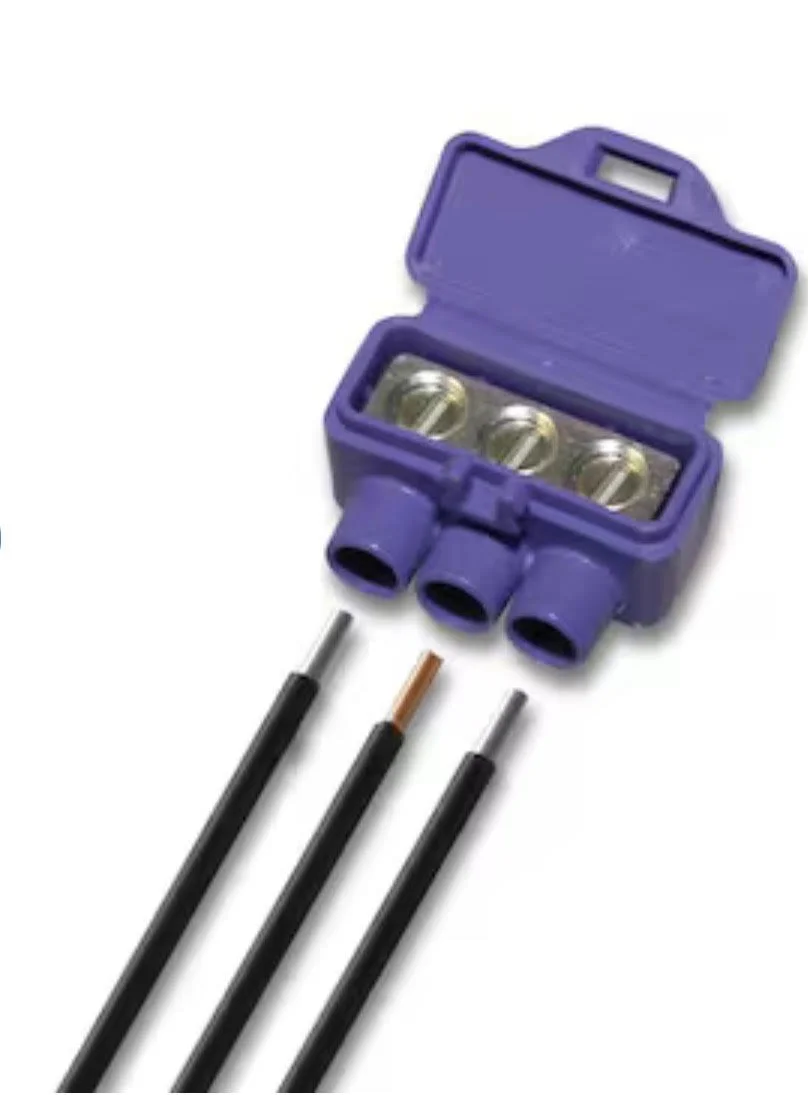
Pigtailing addresses the actual problem, which is the connection point, not the wire run. A short length of copper wire is joined to the aluminum wire using a connector rated and listed specifically for aluminum-to-copper connections. The copper end then connects to the outlet, switch, or fixture.
The aluminum wire still runs through the wall. But it no longer makes direct contact with a copper-only device. The transition happens inside the box using a connector designed for exactly that purpose.
The CPSC specifically recommends pigtailing as an acceptable repair method when done correctly, using connectors that carry the "CO/ALR" rating (more on that below) or using wire nuts rated for aluminum-to-copper connections, such as those listed under UL 486C. The work must be performed by a licensed electrician who understands the specific materials required.
Pigtailing done with the wrong connectors, or done by someone unfamiliar with aluminum wiring requirements, is not a safe repair. The material specifications matter.
What CO/ALR Means and Why It Matters
CO/ALR is a device rating that indicates an outlet, switch, or connector has been tested and approved for use with aluminum wiring. The designation stands for copper-aluminum revised.
Standard outlets and switches are rated for copper only. Installing aluminum wire directly on a copper-only device is what creates the long-term connection problems described above. CO/ALR-rated devices use terminal designs that accommodate aluminum's expansion characteristics and minimize oxidation risk.
When a licensed electrician pigtails your aluminum wiring, they should be using connectors that meet the applicable listing requirements for aluminum-to-copper connections. This is not a place to improvise with whatever is on the shelf at the hardware store.
Frequently Asked Questions
-
Outdated wiring covers a range of conditions, but the risks tend to cluster around a few core problems.
Fire. This is the primary danger; outdated wiring and fire risk go hand in hand. Loose connections, degraded insulation, overloaded circuits, and faulty breakers all generate heat. Heat in a wall cavity, around insulation, or near framing material can ignite without any prior visible warning. The National Fire Protection Association consistently identifies electrical failures or malfunctions as one of the leading causes of home structure fires.
Shock and electrocution. Wiring with cracked, brittle, or missing insulation, common in homes with very old cloth or rubber-insulated wire, exposes energized conductors. Contact with exposed wiring is a serious electrocution risk for homeowners and anyone doing work on the home.
No ground fault protection. Older wiring systems often lack ground fault circuit interrupter (GFCI) protection in bathrooms, kitchens, and exterior outlets. GFCI protection was introduced in the early 1970s specifically to prevent electrocution in wet areas. Homes without it are not meeting current code minimums for safety, regardless of whether they're required to update.
Inability to handle modern loads. A home wired in the 1960s was designed for the electrical demand of 1960s appliances. EV chargers, heat pump systems, multiple large-screen TVs, home office equipment, and high-draw kitchen appliances place demands on circuits that older wiring was not sized to handle. Sustained overloading degrades wiring over time.
-
The wiring types you're most likely to encounter in an older home, and how to recognize them, are as follows:
Knob-and-tube wiring (pre-1950). This is the oldest system commonly found in existing homes. It consists of individual wires run separately through ceramic knobs (which anchor the wire to framing) and ceramic tubes (which protect wires passing through wood). There is no ground wire, and the insulation is cloth or rubber that has often become brittle with age. Knob-and-tube wiring is not inherently dangerous if it's been left alone and is in good condition, but it cannot be safely buried under insulation and is incompatible with modern grounded devices.
Cloth-insulated wiring (1930s–1960s). Wiring from this era used rubber conductors wrapped in cloth braid. The rubber insulation degrades over decades, becoming hard, cracked, and prone to flaking. If you look in your attic or basement and see wiring with a woven fabric appearance, that's cloth-insulated wire. The condition of the insulation matters more than the age of the wire itself.
Aluminum branch circuit wiring (1965–1973). As described throughout this post, aluminum wiring looks similar to copper wiring but has a silver color rather than the orange-red color of copper. If you can access a junction box or outlet box, check the wire color. You can also look at the outer jacket of wiring in visible areas; aluminum wiring from this period is sometimes marked with the letters "AL" on the jacket.
Ungrounded two-prong wiring (pre-1960s). If your home has two-slot outlets throughout rather than three-slot grounded outlets, the wiring likely predates the grounding requirements that became standard in the late 1960s. Two-prong outlets are not grounded and cannot safely power modern electronics that require a ground.
If you're uncertain about what type of wiring your home has, the most reliable approach is a wiring inspection by a licensed electrician. Identifying wiring type from the outside is not always straightforward.
-
Pigtailing is the practice of connecting a short length of wire to the end of a longer wire run, with the short piece (the pigtail) making the final connection to a device or terminal.
In the context of aluminum wiring, pigtailing means joining a short copper pigtail to the end of an aluminum wire using a connector rated for aluminum-to-copper connections. The copper pigtail then connects to the outlet or switch. This keeps aluminum from making direct contact with a device that was designed only for copper.
Pigtailing is used in other electrical contexts as well. When multiple wires need to connect to a single-terminal device, an electrician may pigtail all the wires together and run a single short wire to the device, rather than crowding multiple wires onto one terminal.
The technique itself is straightforward. The critical factor with aluminum wiring is using the correct materials. The wrong connector can make the connection point more dangerous, not less.
-
Yes, when performed correctly using listed materials, pigtailing aluminum wiring is both safe and code-compliant. The CPSC recognizes it as an accepted remediation method. The National Electrical Code permits it when the connectors used are properly rated.
The qualifiers matter here. Pigtailing done with wire nuts rated for copper only does not meet the standard. Pigtailing performed by someone unfamiliar with aluminum wiring requirements may look complete while introducing new risks. The connectors used must carry the appropriate listing for aluminum-to-copper use.
When an All-in-One Electric master electrician performs aluminum wiring remediation, the work is done to code and with materials that meet the applicable listing requirements. If you're buying or selling a home, or if an insurer has raised concerns about your aluminum wiring, pigtailing performed by a licensed master electrician with documentation of the work done is the standard that satisfies most requirements.
-
If your home was built between 1965 and 1973, there's a reasonable probability that aluminum wiring was used for branch circuits. Homes built after 1973 are less likely to have aluminum branch circuit wiring, though aluminum is still used today for large-gauge service entrance wiring (the main wires feeding the panel from the utility), which is normal and not a concern.
To check without opening your walls, start with the outlet boxes. Turn off the breaker for a circuit, remove an outlet cover plate, and look at the wire color where it connects to the device. Copper wire is orange-red. Aluminum wire is silver-white. You can also look for "AL" markings on any visible wiring jacket in the attic, basement, or utility areas.
If you'd rather not do that yourself, an electrician can identify aluminum wiring during an inspection quickly and without any guesswork.
What to Do Next
Aluminum wiring in your home is a manageable situation. It doesn't mean your house is on the verge of burning down. It does mean the connections throughout your electrical system deserve attention from someone who knows what they're looking for.
If your home is in the age range where aluminum wiring is likely, or if you already know you have it and haven't had the connections addressed, a call to All-in-One Electric is the right starting point. Larry and Logan Green are both licensed Texas Master Electricians with nearly four decades of experience in North Dallas homes. They can assess what you have, explain your options clearly, and handle the remediation to code.
Call All-in-One Electric to schedule an electrical inspection.
All-in-One Electric serves Richardson, Plano, Garland, Allen, McKinney, and surrounding North Dallas communities. TECL 23777.